When times are tough, it becomes clear to us that one of the things that we lack is happiness. So many people have told me that they simply want to be happy when going through a stressful period. But when I ask them what happiness means to them, they can’t explain how they want to feel. Or what happiness means to them? But how can you start working on increasing your happiness if you don’t know what that means to you?
Well, you can’t. But, the good news is that with a little bit of introspection, you can figure out what you are missing in your life and start working towards increasing your happiness levels.
What is happiness?
Let’s start by defining what happiness is or can mean to you. Generally speaking, happiness is a mental or emotional state. It includes uplifting or pleasant emotions such as joy, contentment, amusement, gratitude, hope, and successfully create the state of well-being, life satisfaction, and lastly, your ability to flourish in life. As Martin Seligman pointed out in his work on positive psychology, flourishing is the key to a content life. Happiness alone isn’t enough to feel happy.
In positive psychology, we start by identifying the areas that make you feel satisfied and fulfilled. As I like to say, life is about finding joy and recreate it by understanding your strengths and using them daily. Then, you can use your skills to solve complex problems that make you feel impactful and help you create purpose in life.
When you are impacting others positively by using your strengths, it will create a feeling of belonging. That is also why people that focus their work on the well-being of others report higher life satisfaction. And yes, it can be confusing when you hear that. Especially because we consistently hear that we need to take care of ourselves first. However, community and belonging are two main aspects of human nature. Our lives become meaningless without others, so it’s no wonder that research shows that when we focus on helping others thrive in life, our levels of happiness increase.
When our actions create happiness.
According to Plato’s virtue-based eudaimonistic concept, happiness or well-being (eudaimonia) results from taking suitable actions. Therefore solemnly focusing on yourself will never give you the answer to what your purpose should be or how to create more joy in life. On the contrary, throughout history, human beings were never as interested in their well-being as they are right now. Interestingly enough, the more we focus on individual happiness, the higher the suicide rate is. At the same time, some of the studies are inconclusive and certainly need further discussion. Quite often it becomes visible for the travelers around us when we move through countries. For example, every time I travel through a country in Africa, I can’t stop wondering why so many people back home suffer from depression, anxiety, and continued “complaintytis” (aka the ability to criticize everything continuously) without realizing the adverse effects on your mental health well-being.
Happiness is not a primary emotion. And historically speaking, happiness wasn’t the primary issue till the last 50 years of our human existence. But, of course, that doesn’t mean that people didn’t experience happiness. But on the contrary to the widespread belief, happiness is something that happens in specific moments and is not a constant stage. That’s why in positive psychology, we speak about developing the ability to thrive through life. But, of course, with that comes the increase of happiness.
These Positive Psychology techniques can increase your happiness levels and help you to be more effective.
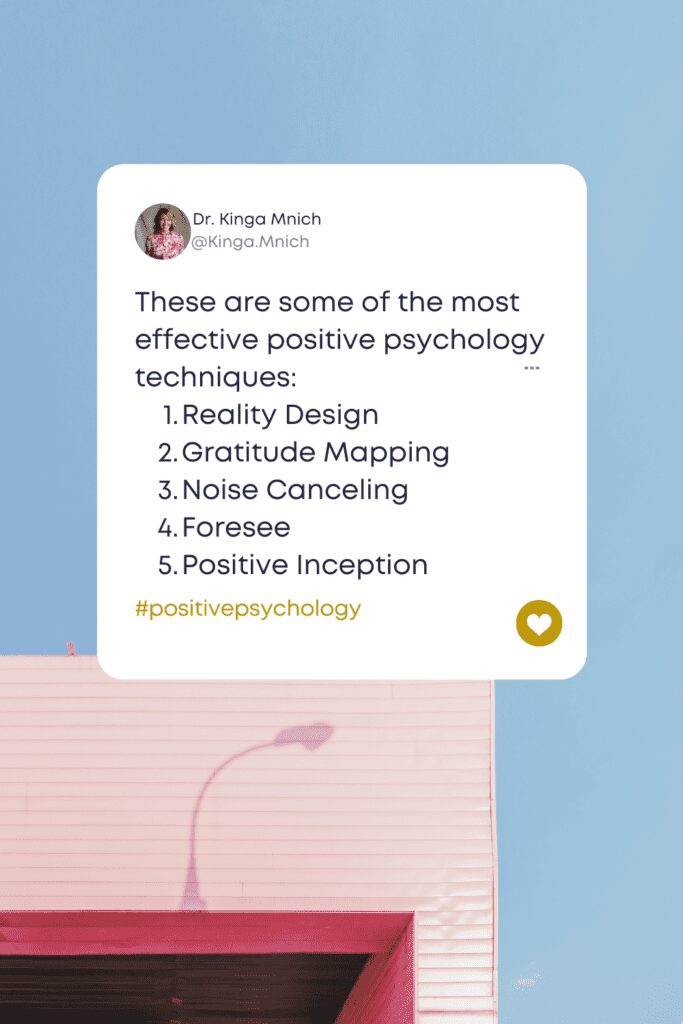
1. Reality Design
Quite often, we are stuck in our ways of doing things and thinking in a particular way. Designing different realities helps your brain to change perspective and refocus. It is all about broadening your perspective. That’s why traveling places with different cultures broadens your horizon. When you travel you see other ways of living and thinking. You can also achieve this on a day-to-day basis by training your brain to add different points of view. Once your picture additional possibilities, choose the most favorable one for you and focus on turning that into reality.
2. Gratitude Map
Shawn Achor calls this mental cartography. First, revisit your life and highlight the meaningful events and why you are grateful for them. Secondly, take a closer look at what is significant in your life. Make sure to distinguish it from what you are drawn to because others are striving for it. It is crucial to differentiate between shiny object syndrome and what keeps you inspired. This will allow you to identify better goals and create more direct routes to your goals by reorienting your mental maps (Achor, 2013). More so, it will enable you to be essential in your choices and stay on your path.
3. Noise Cancelling
Noise-canceling is significant on many levels. Noise pollution is a serious issue that we are surrounded by. Creating spaces where you can silently work can improve your happiness levels and help you be more productive. But it is also essential to focus on the crucial information and therefore cancel out all unnecessary noise. Including news, watching excessive, unnecessary TV, and spending time with people distracting you from your goals by wanting to share their opinions. Listen carefully to important messages and find the actual subject matter experts that you can benefit from. Lastly, learn to cancel out the negative and distracting inner voices of fear, anxiety, worry,
4. The Z-spot or 4C-Foresee
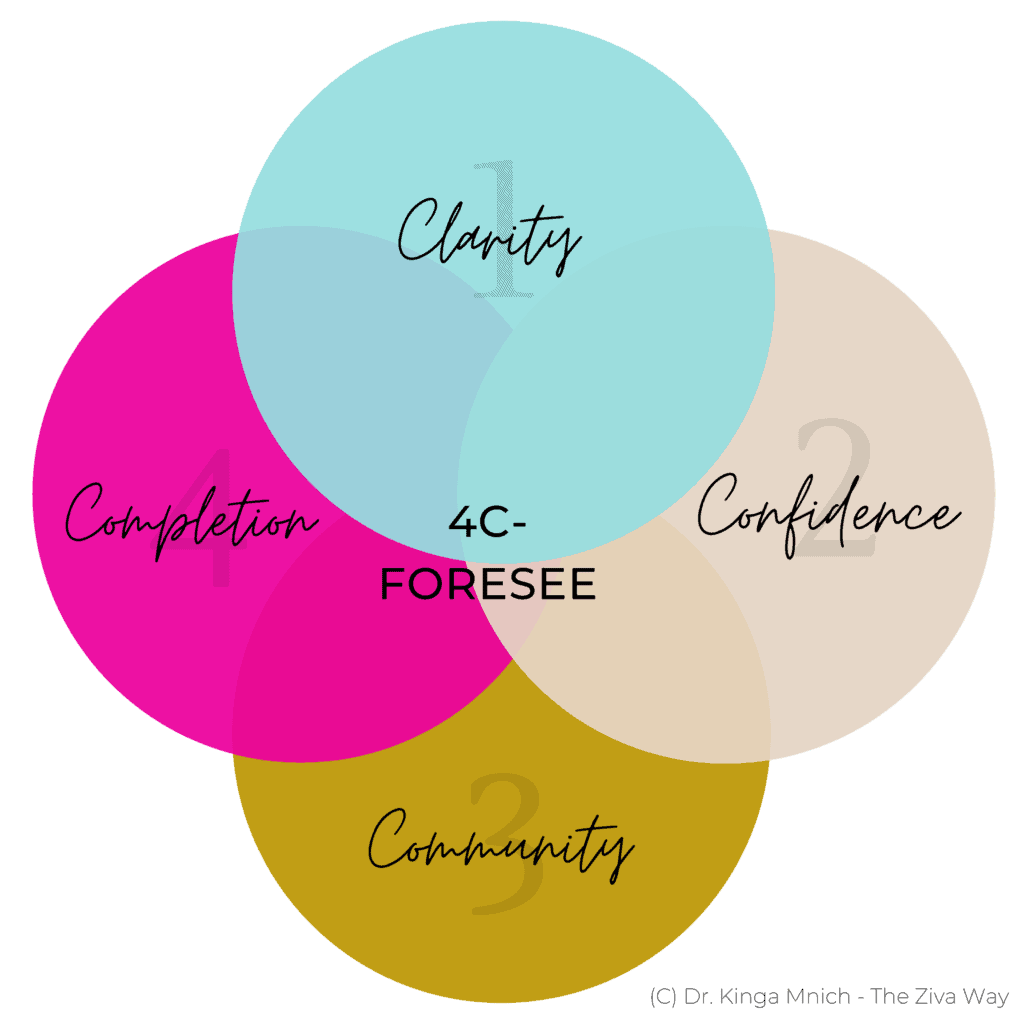
Create clarity and confidence through building your intuition by acknowledging past successes. Build a community that you trust, and that understands your vision. Sometimes we need to find new people that understand new ideas and can see us for what we want to become and not for what we were in the past. Moving forward at the end of the day means reinventing yourself. Zoom in on your target by building significant stepping stones along your path. Remember that goals need to be measurable because that allows you to celebrate the small wins and stay motivated. Also, it enables you to understand how much time and effort you need to put into each stage. The last stage is the completion part. This Foresee-system allows you to decrease fear and worry and refocus on what matters most.
5. Positive Inception (Shawn Achor, 2013)
The goal of positive psychology is to create a positive reality for yourself. Once you succeeded in creating a positive reality for yourself, find ways to transfer these skills onto others. This is not just about being optimistic; this is about creating an environment in which all of us can flourish. And because I know that you might be a bit critical of this, but science showed that evolution and continuous improvement is based on positive experiences, not negative ones. So even if you have a positive outlook and you might not succeed at the first attempt, keeping a positive mindset helps you keep on going and coming up with new ideas. It keeps us creative.
These techniques will increase your happiness levels, but they will help you succeed in life and feel good.
What are the benefits of positive psychology coaching?
Research has shown that several positive psychology strategies can significantly raise our level of happiness. Of course, happiness isn’t necessarily a constant state of mind, but it can be an ongoing strategy because the benefits of happiness are significant and widespread and extend far beyond just feeling good. For example, happier people tend to be healthier, live longer, have closer friendships, are more creative and productive at work, as well in life, and achieve impactful success. Research also shows that the happiest people tend to: express more gratitude regularly, nurture relationships with family and friends, practice optimism, appreciate the positive experience in their lives, and lastly, commit to and turn meaningful goals into reality.
Feel free to contact me if you would like to learn more about Positive Psychology Techniques that you can benefit from.
Read more:
Is Individualism Suicidogenic? Findings From a Multinational Study of Young Adults From 12 Countries